
Gold and silver are not new to people. Long before stock markets and digital money, people
trusted these metals to protect their savings. Even today, when prices of daily things keep
going up and money feels less powerful, people naturally look at gold and silver again.
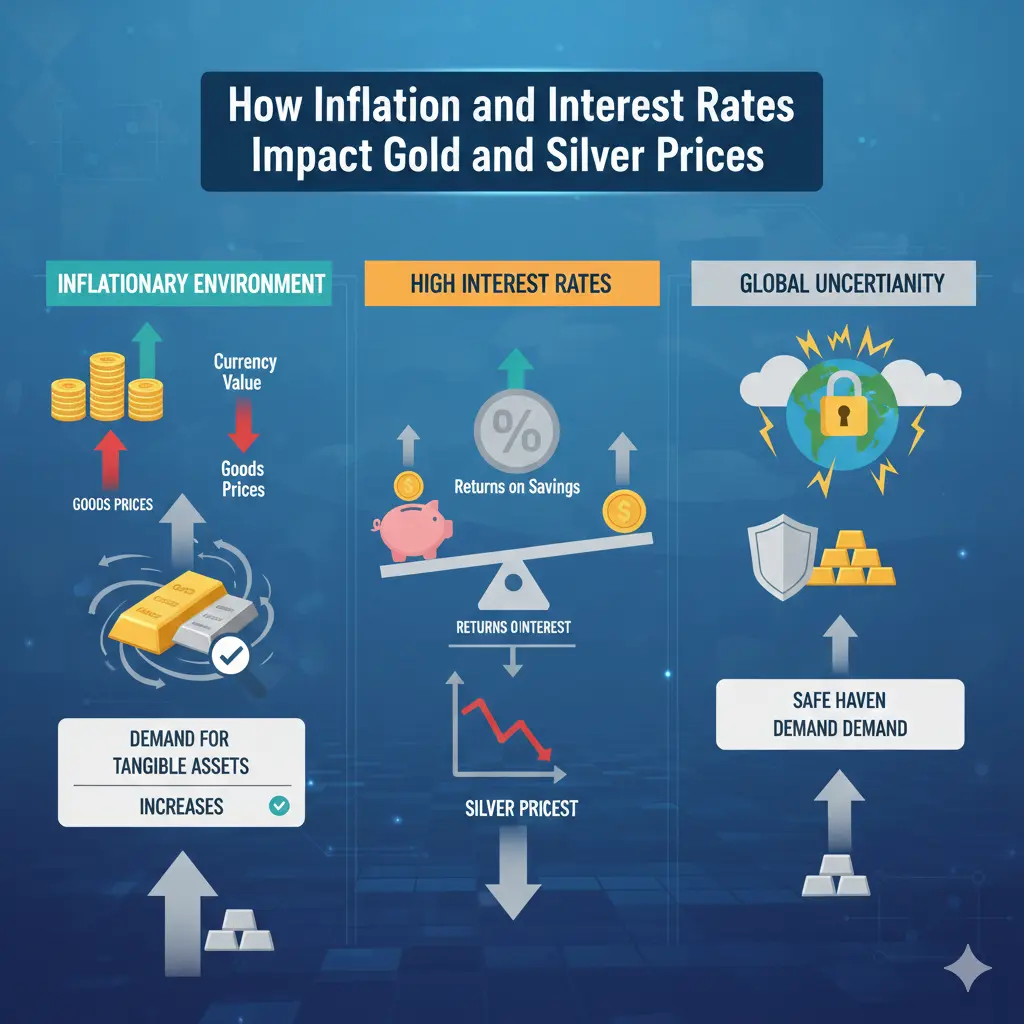
Inflation simply means everything becomes more expensive. Groceries, fuel, rent, all start
costing more. At that time, people feel worried about their savings losing value. Gold
becomes attractive because its supply cannot be increased easily. No government can print
gold the way they print money. That is why, during high inflation, many people buy gold to
feel safe.
Silver also becomes popular, but for different reasons. It is not just a precious metal. It is used
in factories, electronics, solar panels, and many industries. So when the economy is active,
silver demand rises. When people are scared, silver still gets attention, but its price moves
faster and more sharply than gold.
Interest rates play an important role here. When interest rates are low, bank savings and fixed
deposits do not give good returns. At that time, holding gold or silver feels like a better
choice. But when interest rates go up, banks and bonds start giving higher returns. Then many
people prefer interest-earning options instead of gold and silver, because these metals do not
give regular income.
Still, the market is not run only by logic. News, fear, wars, political tension, or sudden
economic trouble can change everything overnight. In such moments, people rush back to
gold and silver, no matter what interest rates are.
In simple words, gold and silver move with human emotions. Fear, trust, and uncertainty
decide their value as much as numbers do.
24
Jan